A Pipe Dream (esoragoto)
Harajuku and Jingumae.
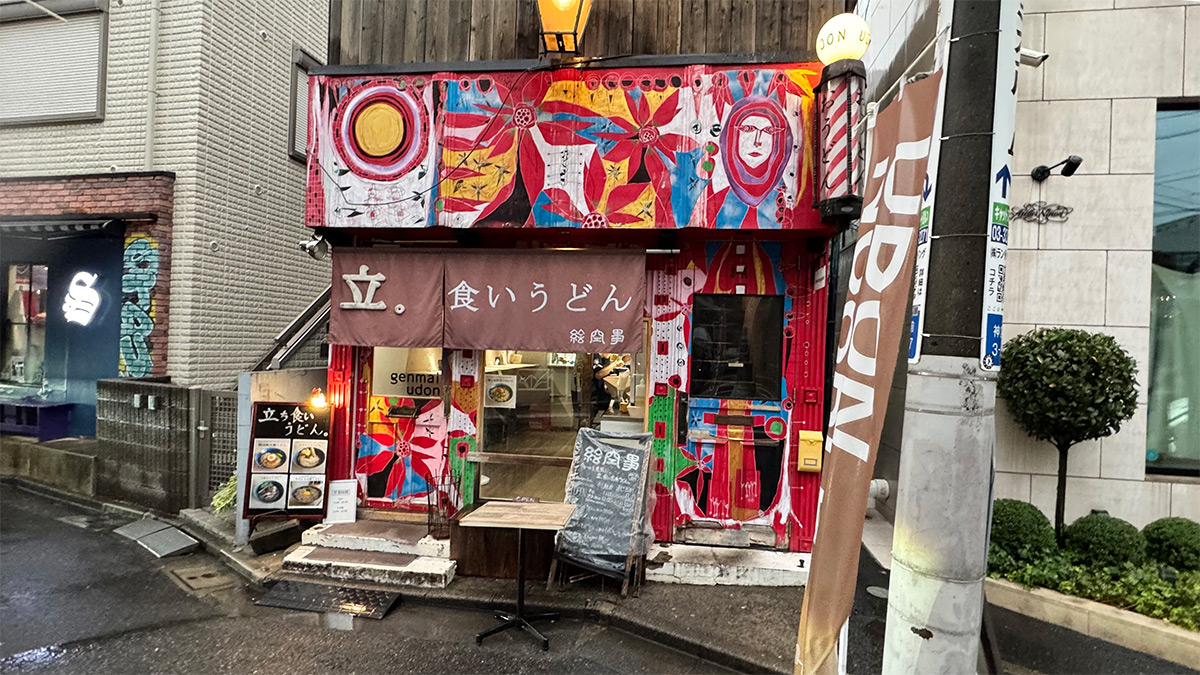
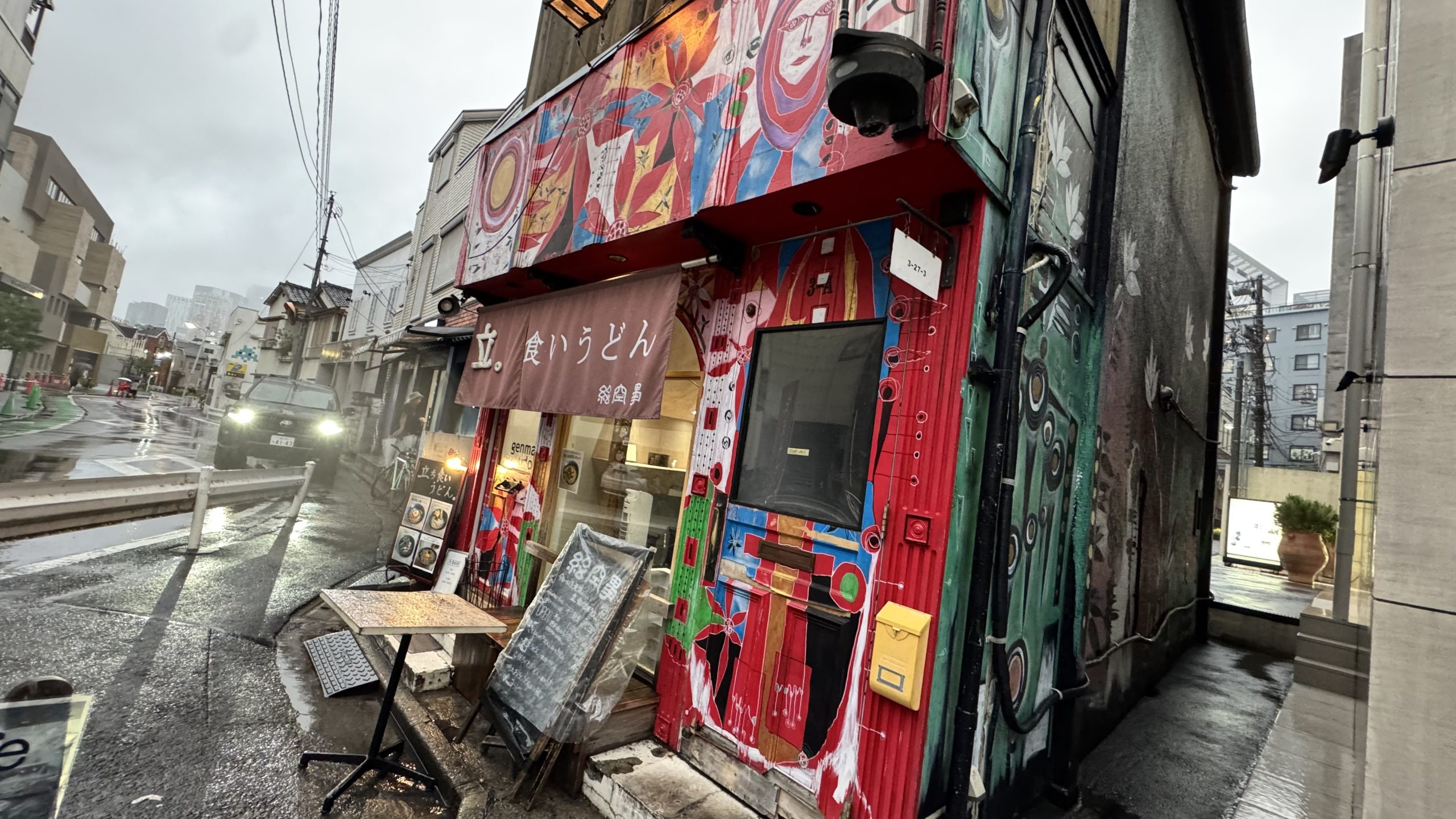
This area is lined with trendy cafes and boutique shops, attracting people who are always on the cutting edge of fashion. Amidst all this, if you venture down a side street, a sign painted in red and yellow suddenly comes into view.
The unique illustrations painted on the wooden walls look just like street art from abroad. Anyone seeing it for the first time is sure to stop in their tracks and wonder, “Wait, what is this building?” This is “Esoragoto,” a standing-only brown rice udon specialty shop.
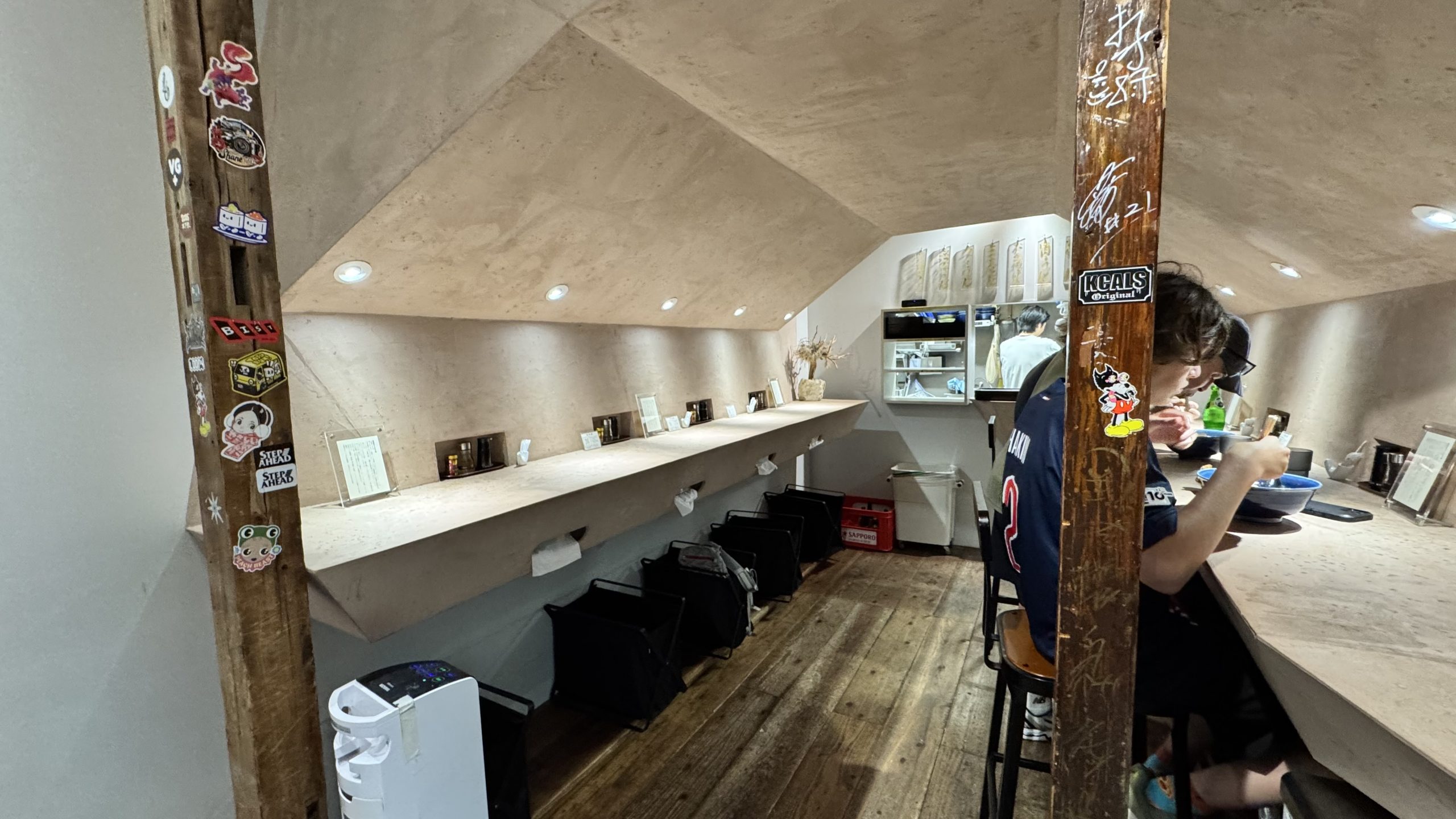
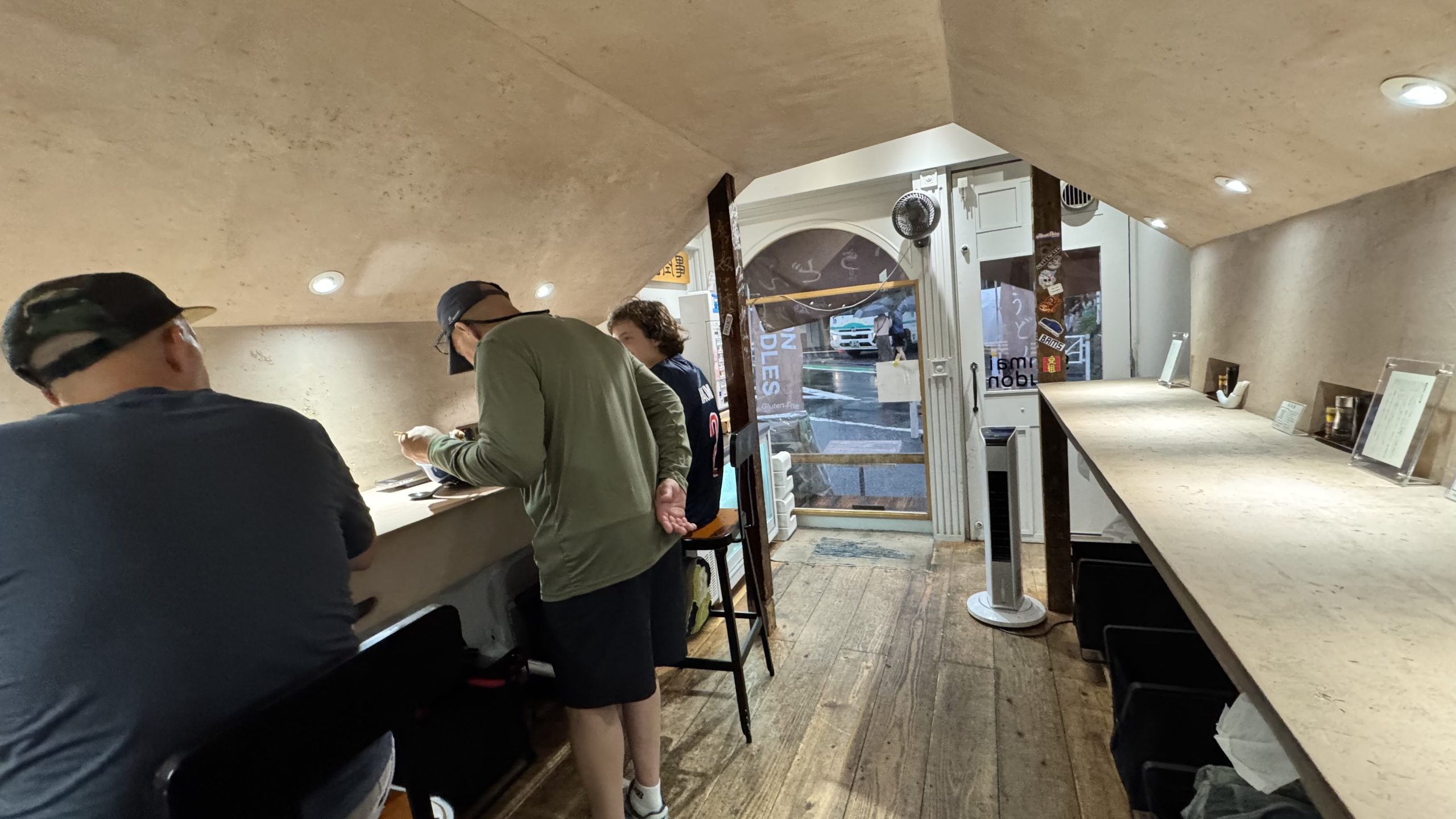
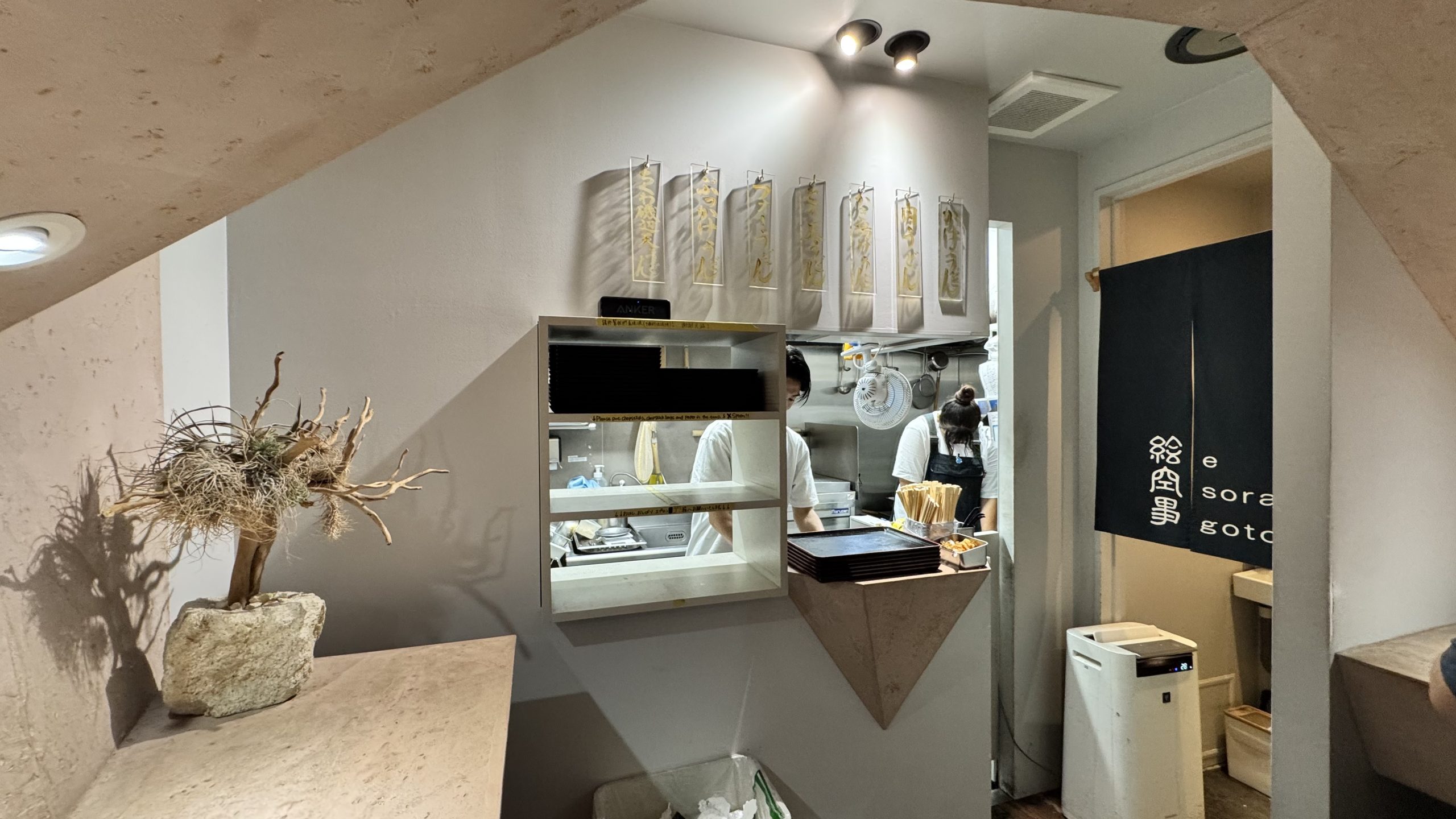
The exterior is pop and a bit funky. But step inside, and the atmosphere changes completely—revealing a simple, stylish space with exposed concrete walls. Although it’s a small shop of about 15㎡, the layout is efficient, so even when eating standing up, you won’t feel cramped.
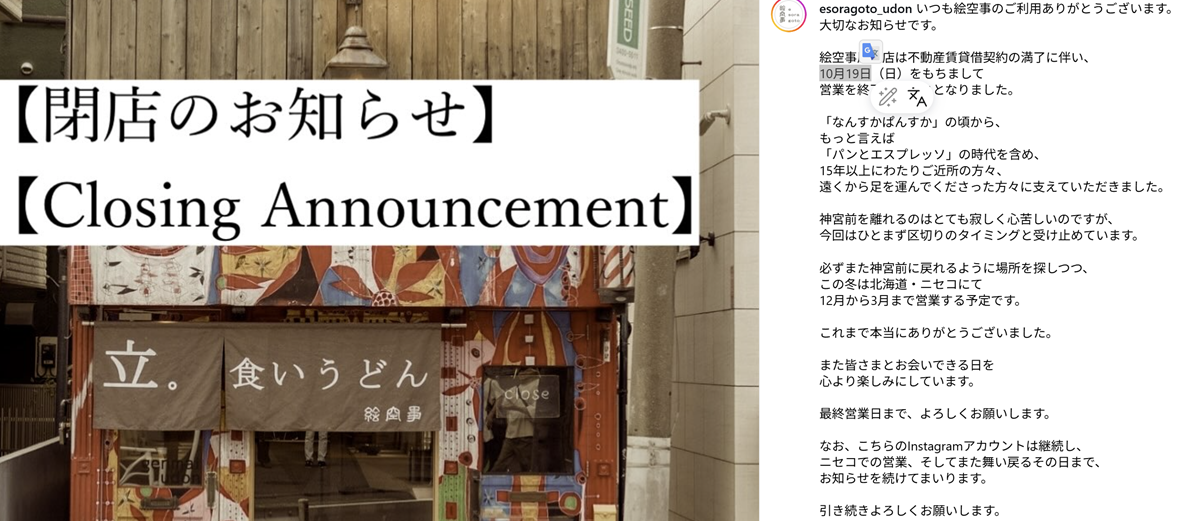
An announcement about the shop’s closure was posted on Instagram. It’s a shame, but let’s look forward to the day it reopens in Jingumae!
An Award-Winning Store Design Recognized Worldwide
“Ezukuji” is also the winner of the Restaurant category at the A+Awards 2024, hosted by the global architecture platform “Architizer.”
It seems the design—which incorporates the “standing-while-eating culture,” a rarity overseas, and fully utilizes traditional Japanese wooden architecture—was highly praised. Indeed, the contrast between the exterior and interior, along with the standing-while-eating format, must seem quite fresh to people from other countries.

 ポチップ
ポチップThe Process from Ordering to Dining
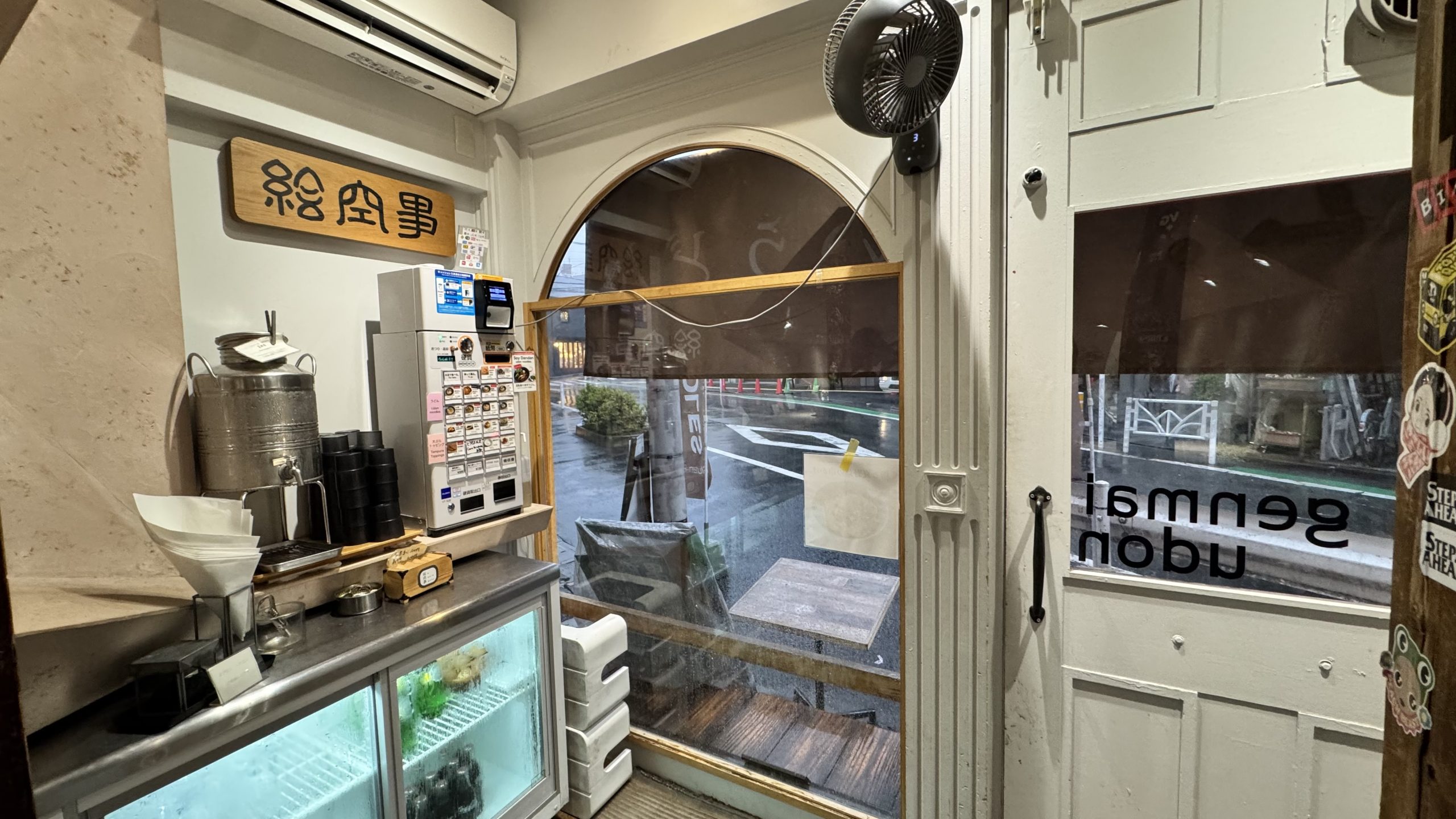
“Ekuuji” uses a meal ticket system. First, purchase a meal ticket from the vending machine next to the entrance and hand it to the counter. It’s a self-service system where you retrieve your food yourself when your number is called.
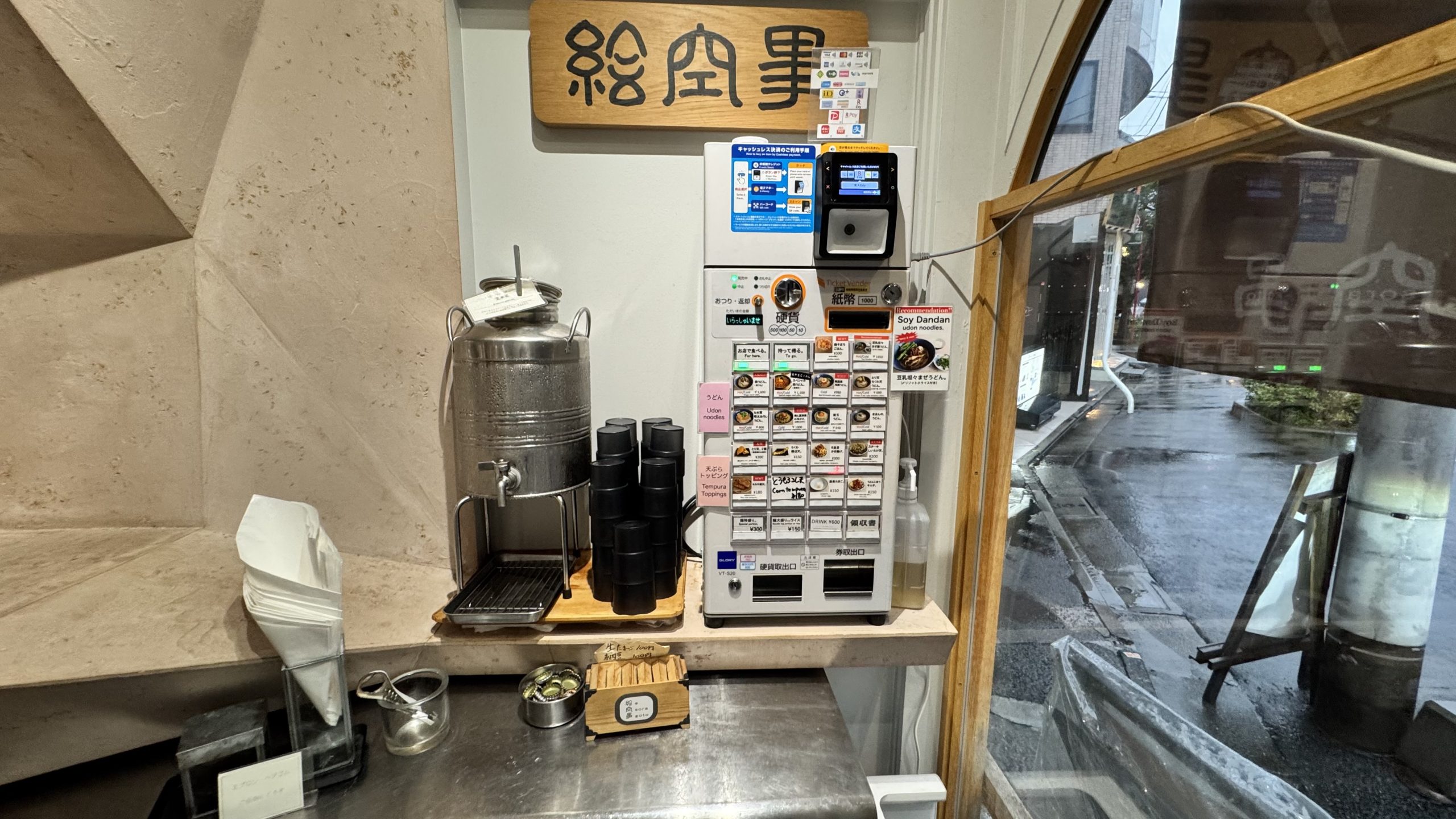
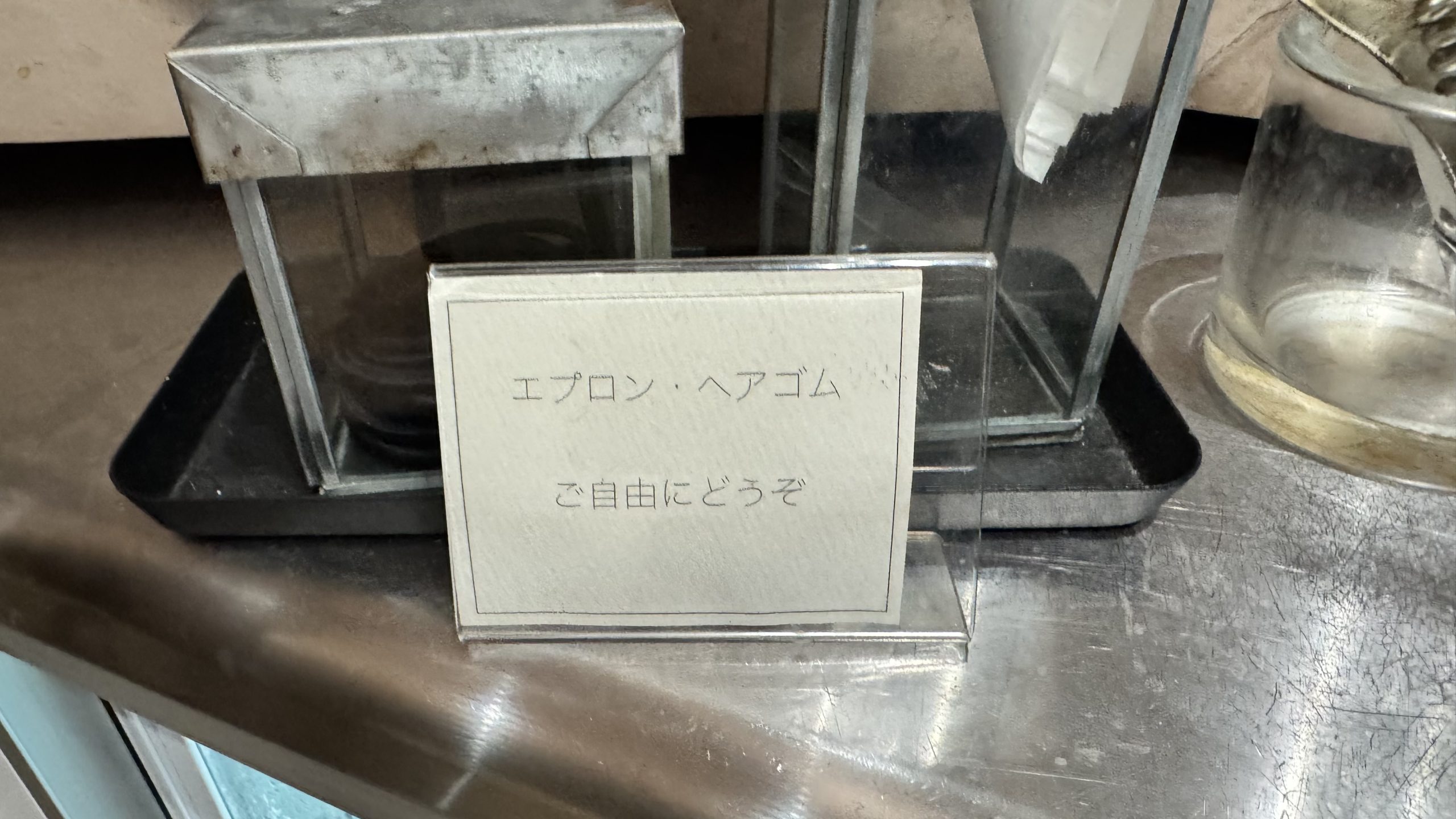
Water is also self-serve. Furthermore, next to the ticket machine, you’ll find hair ties to secure your hair and aprons to keep your clothes clean.
Tissues and a place to set your belongings are provided under the counter, creating a clean and thoughtful environment where everything you need is right at your fingertips.
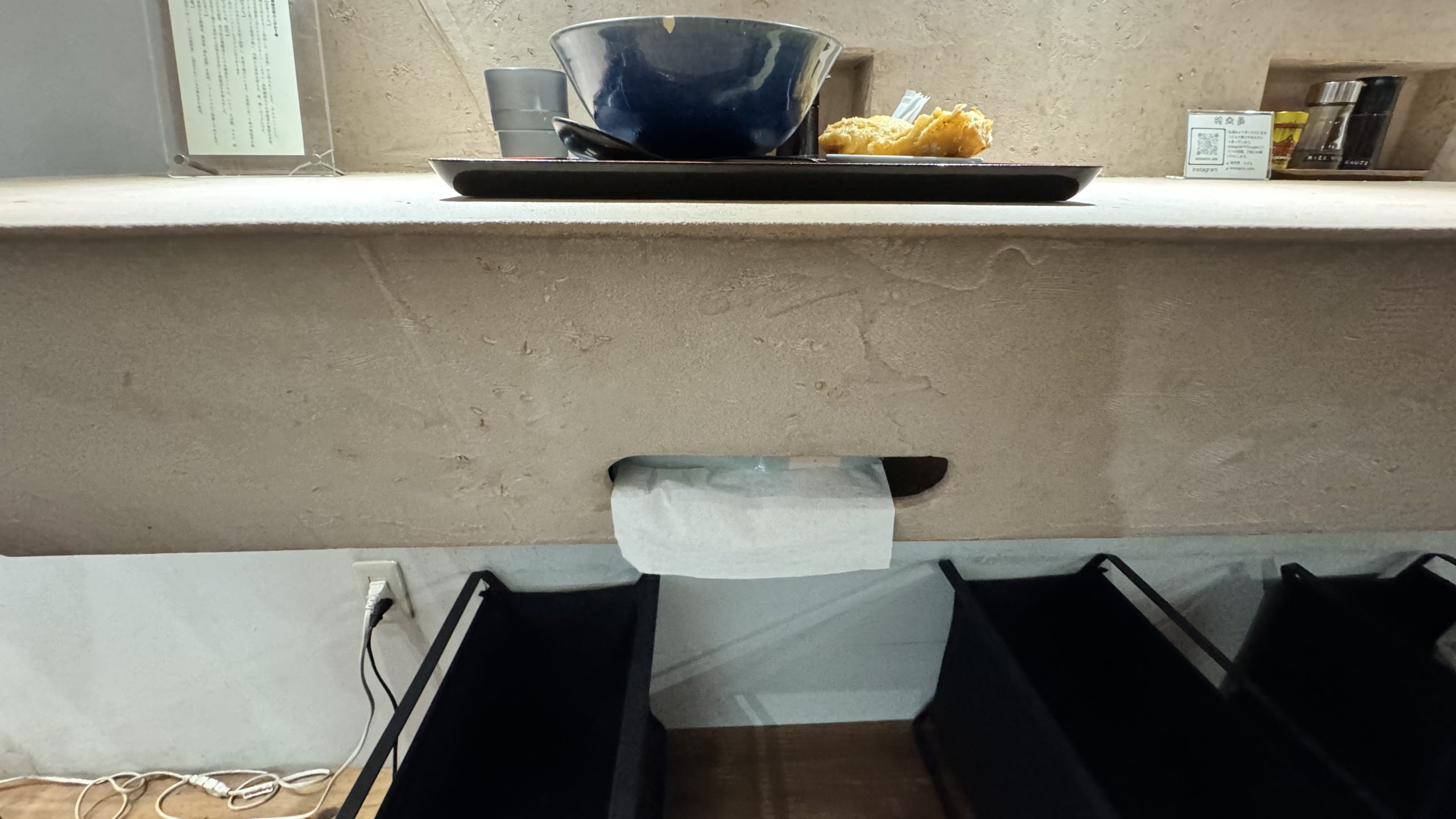
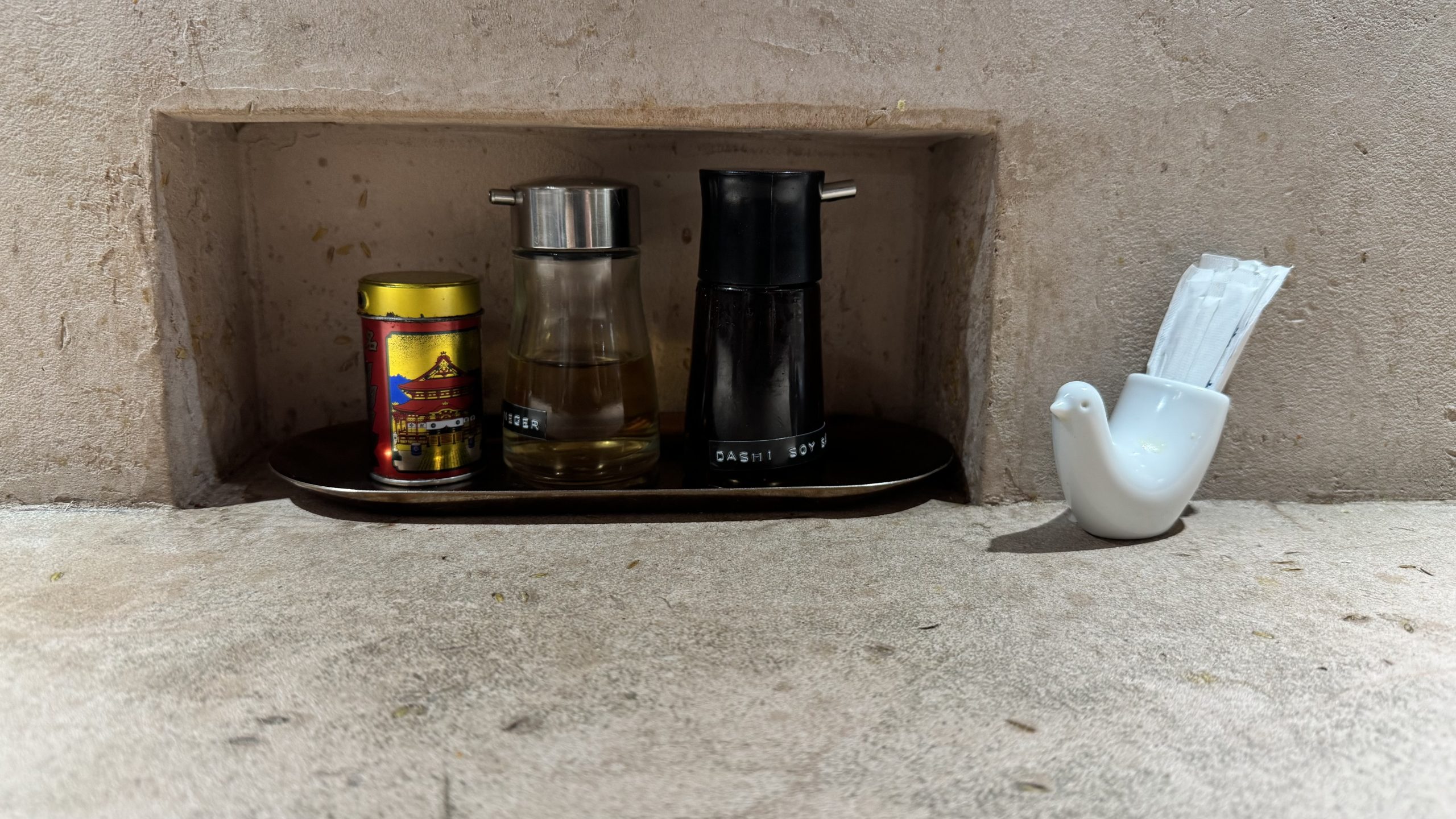
For your meal, you’ll find aromatic shichimi pepper and playful bird-shaped toothpicks —the restaurant’s unique character shines through in even the smallest details.
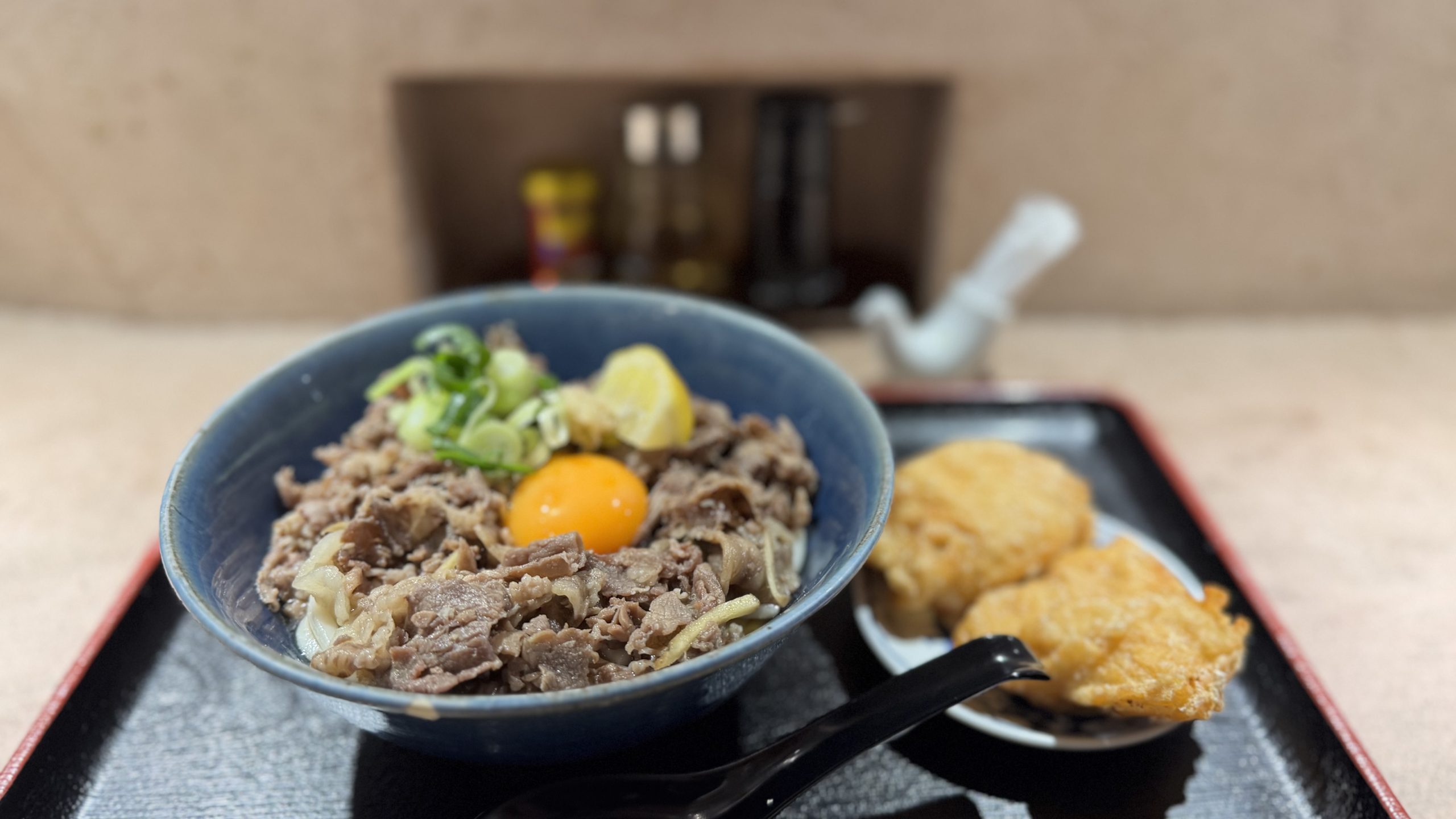
I just had to try both the “Niku Udon” and the “Kashiwa Tempura”
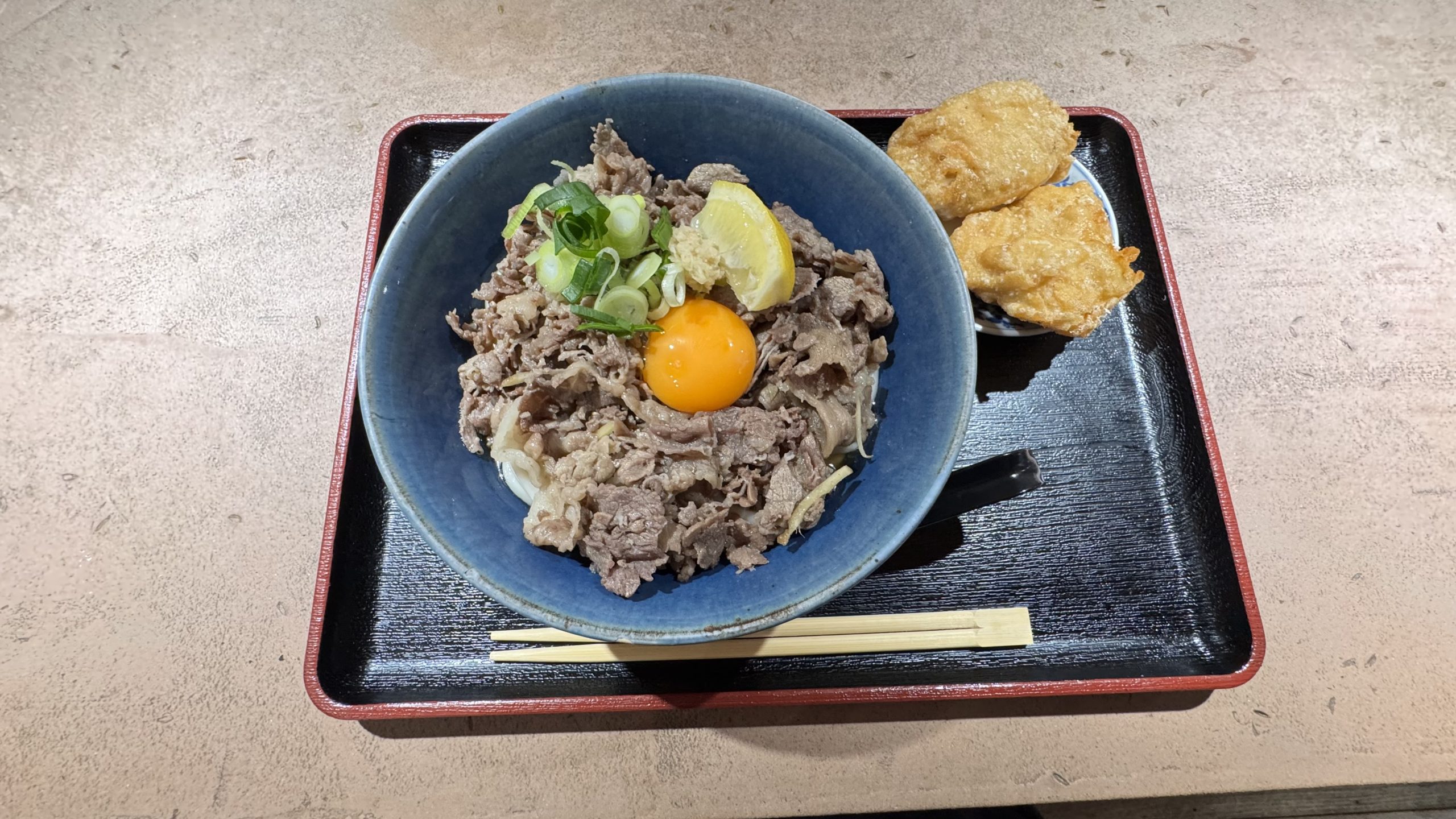
The first item that caught my eye on the menu was the “Niku Udon.”
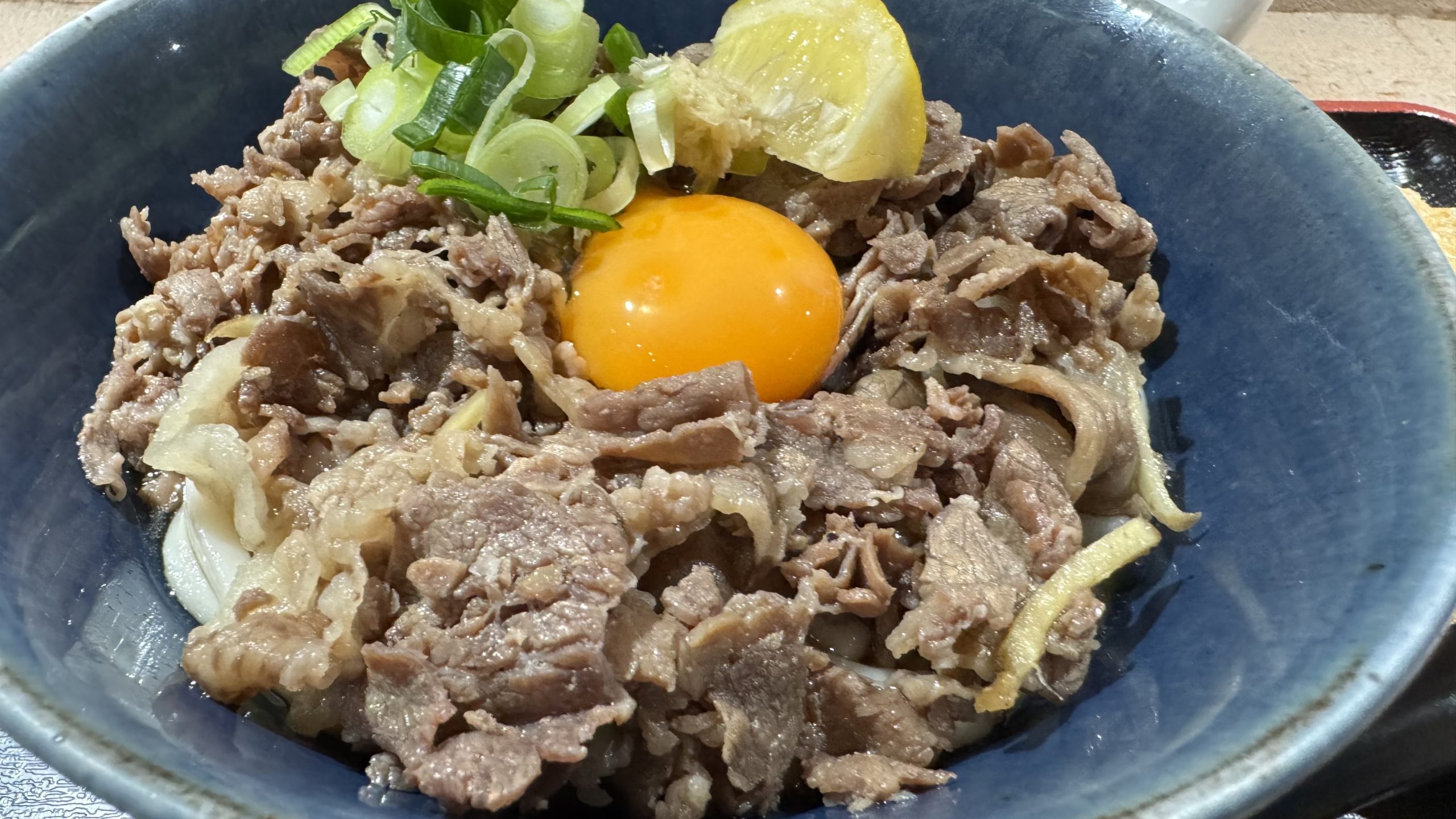
The bowl, generously topped with sweet-and-spicy braised beef, made me certain the moment I saw it that “this is definitely going to be delicious.”
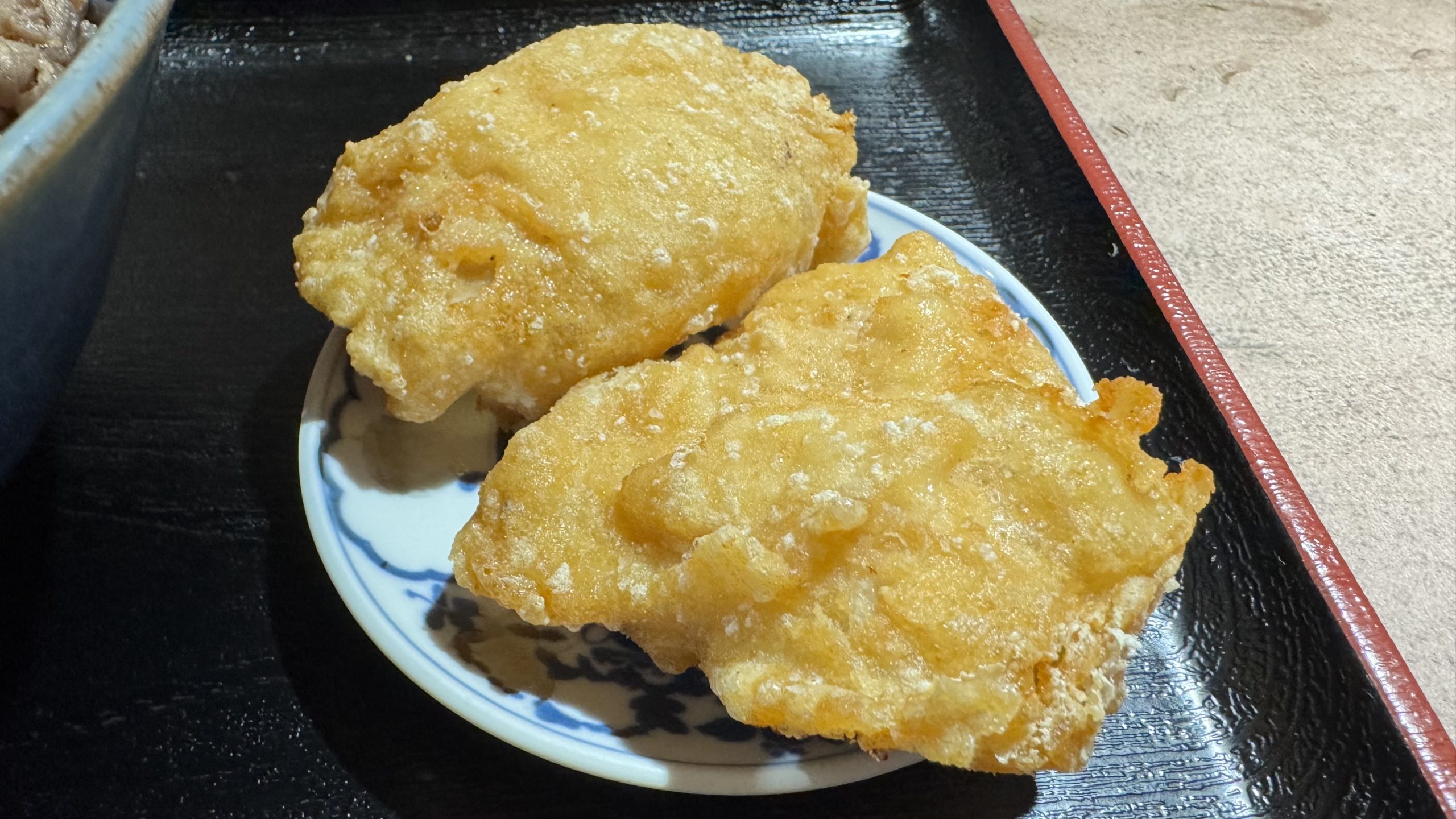
And then there was the “Kashiwa Tempura.” A staple in Fukuoka and other parts of Kyushu, this chicken tempura is known for its light batter and the rich umami flavor of the chicken.
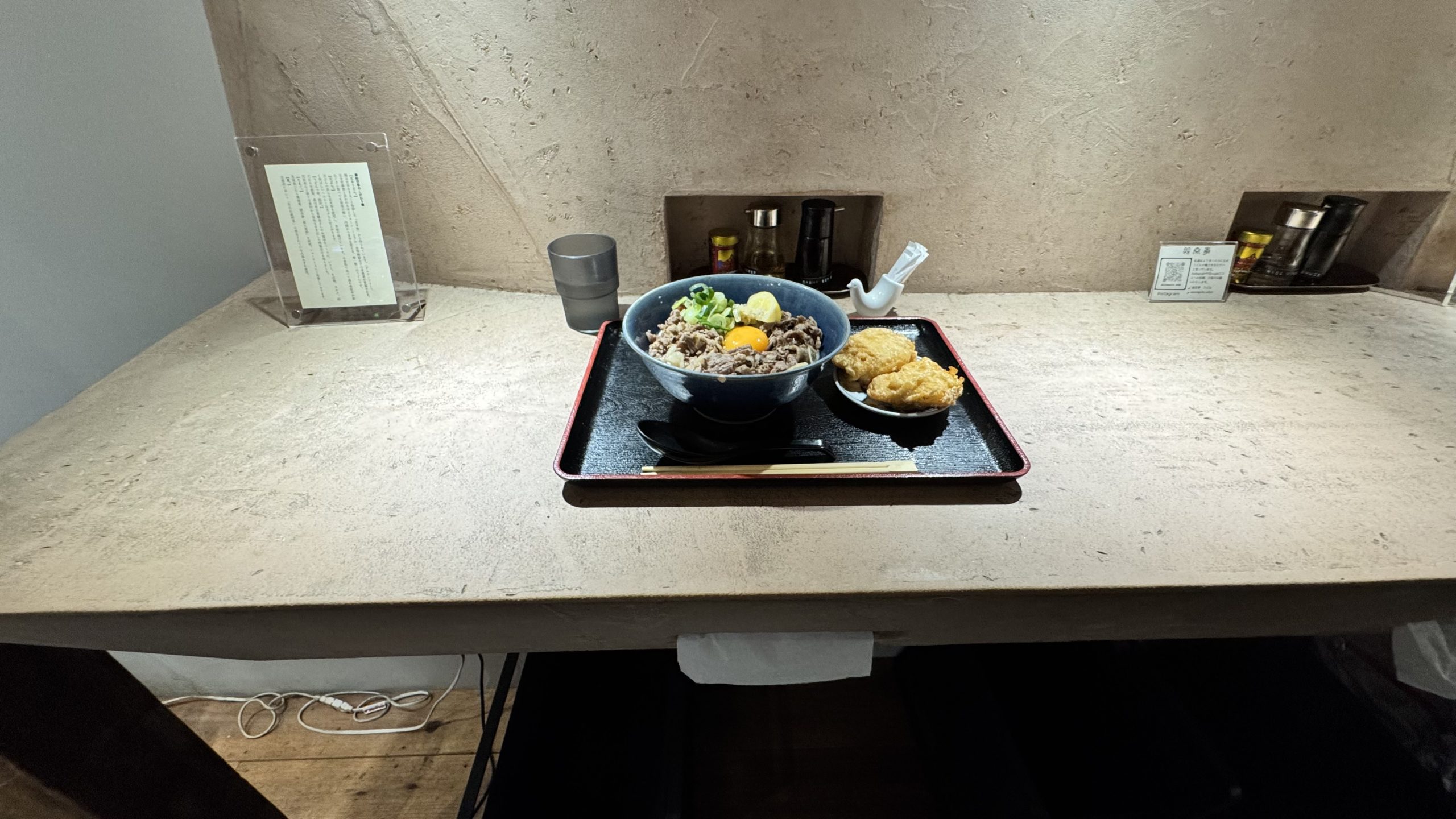
To be honest, I hesitated because I thought the portions might be too big… but I really wanted to try both, so I ended up ordering them both.
The Lightness and Satisfaction of the Beef Udon
The Niku Udon is piled high with beef seasoned to a rich, sweet-and-spicy flavor. It’s not at all greasy, so you can really taste the meat’s umami.
The noodles are made with 100% brown rice flour, no wheat. They aren’t chewy; instead, they have a crisp, smooth texture that slides down easily, leaving an incredibly light aftertaste. I thought, “It’s a standing-style eatery, so the portion should be just enough for a quick bite…” but the fact that my stomach didn’t feel heavy at all after finishing might be a unique characteristic of rice flour noodles.
The Kashiwa Tempura Has an Ultra-Thin Batter
The chicken tempura is coated in a thin layer of brown rice flour batter and fried until crispy in rice oil.
The moment you take a bite, you hear a crisp crack, and the plump, juicy chicken inside is revealed. It’s seasoned well enough that you can enjoy it just as it is, without any dipping sauce—which is a nice touch. It’s hardly greasy at all, so you can enjoy it lightly right to the very last bite.
Ezukogi’s Commitment to Quality
- Brown Rice Udon
The noodles are made from “brown rice flour,” produced by grinding whole brown rice. Rich in vitamins, minerals, and dietary fiber, it’s often referred to as a “complete nutritional food.” It’s gluten-free and known for leaving you feeling light after eating. - Tempura
We use brown rice flour in the batter and fry it in rice bran oil. Since it absorbs less oil than wheat flour, the result is light and fragrant tempura. - Udon Broth
We use a special broth made by combining Kagawa Prefecture soy sauce with a variety of ingredients, including dried sardines, mackerel flakes, dried squid, and Rishiri kelp. - Eggs
We use the highest-grade “Okukuji Eggs” from Hitachi Farm in Ibaraki Prefecture. They are characterized by their rich umami and depth of flavor. - Garnishes
We use “Kujo Negi,” designated as a traditional vegetable of Kyoto Prefecture. Its aroma and sweetness enhance the dish.
Why “Good for You” Actually Tastes Great
You often hear the term “gluten-free” these days, but many people probably wonder, “Does it actually taste good?”
Ezukoi’s brown rice udon isn’t just health-conscious—it’s crafted to make you think, “I want to eat this again.” Our commitment to quality ingredients, such as rice oil and brown rice flour, results in a light aftertaste and a pleasant eating experience, giving you a sense of “guilt-free satisfaction.”
We recommend it not only for those with wheat allergies but also for anyone looking to eat healthier.
Who Makes It?
The brand is operated by Source, the company that launched the popular Omotesando bakery café “Pan to Espresso to.”
The brown rice udon was reportedly developed in collaboration with “Dot Piece,” a company founded by Katsuyuki Kiyomiya, the former head coach of the Japanese national rugby team.
Rice flour is easier to digest than wheat gluten, and brown rice is rich in vitamin B and dietary fiber. After more than 10 years of exploring the standing-counter dining concept, they say they’ve finally found the “ultimate ingredients.”
A New Stand-and-Eat Culture Spreading Through Small Shops
There are few seats, and most customers eat standing up. But that means the turnover is fast—you can pop in, grab a quick bite, and head back out onto the streets—a style that’s quintessentially Harajuku.
I found it to be an interesting shop where you can experience a new genre: “healthy standing-style dining.”
Next time, I’d like to try some of the simpler items on the menu. Given how light the meals are, I could easily treat myself to dessert at a nearby café afterward without a shred of guilt.
Summary: Balancing Health Consciousness and Satisfaction
With brown rice flour, rice oil, and additive-free dashi, the shop maintains a consistent commitment to carefully selected ingredients. The appeal of “Ezukuji” lies not only in its health-conscious approach but also in the high level of flavor satisfaction it offers.
It’s a spot unique to Harajuku where you can enjoy the contrast between the casual atmosphere of a standing-counter eatery and the authentic, high-quality flavors.
FAQ
- Is Ezukuji’s udon truly gluten-free?
Yes. Our udon is made from 100% brown rice flour and contains absolutely no wheat flour. It’s safe for those who want to avoid gluten or have a wheat allergy.
- Is the tempura gluten-free as well?
Yes. The tempura batter is made with brown rice flour, and we use rice oil for frying. The batter is thin and has a light, crisp texture.
- What are your most popular menu items?
Our “Beef Udon,” generously topped with sweet-and-salty braised beef, and our “Chicken Tempura,” which is crispy on the outside and juicy on the inside, are our classic favorites.
- Are there seats available?
It’s primarily a stand-up dining style, but there are a limited number of seats available. During busy times, you’ll likely have to eat standing up.
- Can I make a reservation?
We do not accept reservations. It gets particularly crowded on weekends and holidays, so we recommend arriving with plenty of time to spare.
- When are the busiest times?
It tends to get crowded during lunchtime (12:00 PM–2:00 PM) and on holiday afternoons. Weekday mornings and evenings are relatively quiet.
- Can international tourists visit?
Yes. We have many international visitors, and we offer an English menu. Our staff can also communicate in basic English.
- What payment methods are accepted?
In addition to cash, credit cards and digital payment methods may be accepted. Please check with the store for the latest information.
- Is takeout available?
Some menu items are available for takeout. However, takeout may not be available during busy times or for certain udon dishes.
- Where is the restaurant located?
We are located at 3-27-3 Jingumae, Shibuya-ku, Tokyo, about a 6-minute walk from Meiji-Jingumae Station. We’re tucked away in a back alley in Harajuku.
Store Information
Store: Esoragoto
Address: 3-27-3 Jingumae, Shibuya-ku, Tokyo
Closed: Irregular holidays; shortened hours may apply
Phone: Reservations Not Accepted
Website: https://www.instagram.com/esoragoto_udon/
Tabelog: https://tabelog.com/tokyo/A1306/A130601/13286007/
Nearest Station: 499 meters from Meiji-jingumae Station
Weekday Hours: 11:00–20:30
Weekend Hours: 12:00–20:30

![Google Store Omotesando Report | A Comprehensive Look at the First Official Store Outside the U.S.! From Pixel to AI Experiences and Merchandise [August 2026]](https://thistokyo.com/ja/wp-content/uploads/2026/08/thumb-2-1.jpg)